


 English
  عربى
عربى  中文简体
中文简体
As soon as summer arrives, these industries are most prone to overheating—can your protective gear really handle it?
As June arrives, temperatures have been soaring. For most people, summer means air conditioning, watermelon, and sunscreen; but for frontline workers in factories, workshops, and repair shops, summer means something else entirely—the season with the highest risk of fire has arrived.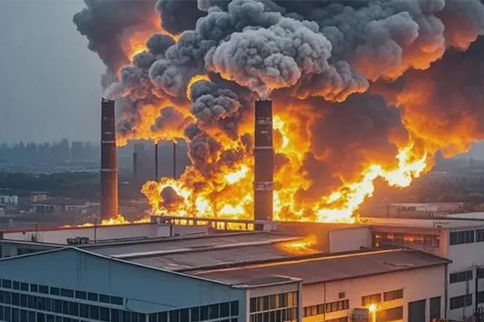
This is not an exaggeration. Every summer, the Ministry of Emergency Management issues safety production advisories for the high-temperature season.
The reason is simple: high temperatures accelerate the aging of electrical equipment, increased lightning strikes lead to reduced insulation, flammable and explosive gases become more volatile, and hot weather makes the human body more prone to fatigue, raising the likelihood of operational errors... The combination of these factors makes summer a “high-risk period” for fire accidents.
Yet among all these risks, one aspect is often overlooked: the workwear worn by frontline workers. Is it safe and comfortable in the high-temperature, fire-prone environment of summer?
01
The Three “Hotspots” for Summer Fires
1. Electrical Circuit Overloads + High Temperatures
Electricity consumption surges in summer. Aging wiring, temporary connections, and overloaded outlets—all of these are potential “powder kegs.” If a short circuit sparks, the first thing to catch fire is often the worker’s clothing. Ordinary cotton workwear ignites immediately upon contact with fire, while synthetic fiber workwear melts and drips when heated, causing secondary burns.
2. Volatile, Flammable, and Explosive Substances + Static Electricity
In high temperatures, flammable liquids such as paint, solvents, and gasoline evaporate more rapidly, forming explosive gas mixtures in workshops or warehouses. Static sparks generated by workers moving around, removing clothing, or rubbing against surfaces are enough to trigger an explosion. If workwear lacks both anti-static and flame-retardant properties, the consequences could be catastrophic.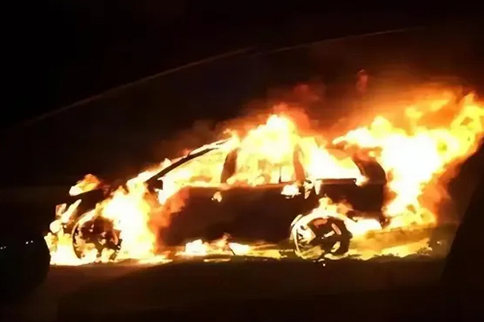
3. Battery Charging + Exposure to High Temperatures
Whether it’s electric forklifts, electric pallet trucks, or employees’ personal electric scooters, battery temperatures are already high during summer charging. If heat dissipation is poor or wiring is worn out, thermal runaway can easily occur. Once a fire breaks out, the high-temperature flames emitted by the battery can reach over 1,000 degrees Celsius.
02
The Summer Challenges of Traditional “Flame-Retardant” Workwear
Many companies have already equipped their workers with flame-retardant workwear, but when summer arrives, problems arise—
Stuffy and Heavy: To meet safety standards, many flame-retardant fabrics sacrifice breathability. Wearing them in the summer feels like being wrapped in a quilt; workers are drenched in sweat after just half an hour of work. As a result, many secretly switch to regular cotton T-shirts—rendering the protective effect completely useless.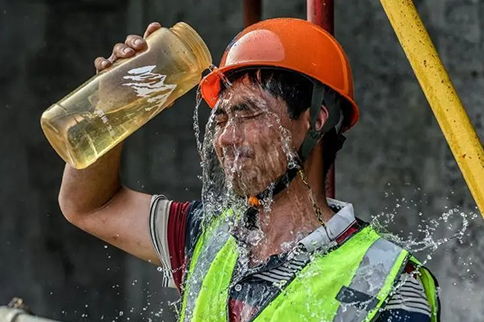
Washing and Care Issues: Coated flame-retardant workwear cannot be washed casually; after just a few washes, the flame-retardant coating wears off. However, due to heavy sweating in the summer, workwear needs to be washed almost daily. The result is often that the workwear’s “flame-retardant” function has already failed before the wearer even encounters a fire.
The Risk of Molten Droplets Increases Rather Than Decreases: When the flame-retardant coating on certain fabrics fails, the fabric not only burns but also melts and drips under high temperatures. In summer, with more skin exposed, a single drop of scalding molten material landing on an arm can cause injuries far more severe than a typical burn.
These challenges turn summer into a “protection vacuum” for frontline workers—it’s not that they don’t want to wear protective gear, but that they can’t stand wearing it, can’t wear it for long, and even when they do, it may not be effective.
03
Making “Non-Flammability” the Standard for Workwear
Is there a type of workwear that can withstand high temperatures and fire hazards while also being lightweight, breathable, and comfortable enough for workers to want to wear?
BlackFire’s independently developed Black Fire carbon fiber ultra-high-temperature non-flammable fabric provides the answer.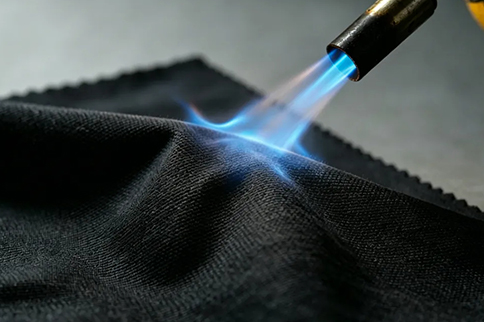
The fundamental difference between this and traditional flame-retardant workwear lies in the fact that it does not merely “delay combustion,” but rather “prevents combustion entirely.” Carbon fiber inherently resists combustion at the fiber level, with a limiting oxygen index of up to 57%. When exposed to direct high-temperature flames exceeding 1,300°C, it remains unburned, unmelted, and non-dripping for 40 minutes.
Based on this technology, BlackFire has developed a series of lightweight protective workwear suitable for summer operations:
Breathable Fire-Resistant Workwear: While retaining carbon fiber’s inherent non-flammable properties, the fabric structure has been optimized to significantly enhance breathability and moisture-wicking performance, ensuring comfort without sweating during summer wear.
Lightweight Fire-Resistant Jackets: Suitable for high-temperature environments such as welding and metallurgy, these jackets resist molten metal splashes while remaining lightweight and allowing for full operational flexibility.
Welding Apron + Arm Guards: Designed for localized high-temperature tasks such as welding and grinding, these provide flexible and precise protection without feeling heavy during summer wear.
Breathable Fire-Resistant Workwear: While retaining the inherent non-flammable properties of carbon fiber, the optimized fabric structure significantly enhances breathability and moisture-wicking performance, ensuring comfort and preventing sweating during summer wear.
Lightweight Fire-Resistant Jacket: Suitable for high-temperature environments such as welding and metallurgy, it resists molten metal splashes while remaining lightweight and not hindering operational flexibility.
Welding Apron + Arm Guards: Designed for localized high-temperature tasks such as welding and grinding, it provides flexible and precise protection without feeling heavy during summer wear.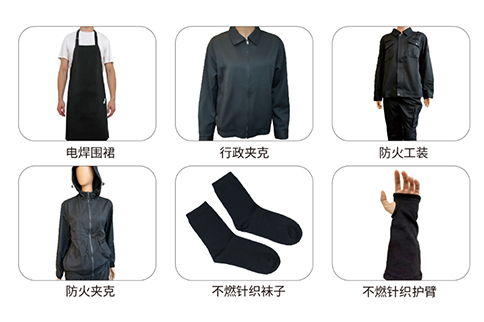
These products have already been put into use during summer production at many companies in the chemical, welding, and new energy sectors. The most common feedback from workers is: “Compared to our old flame-retardant suits, these aren’t as stuffy; they’re more comfortable to wear, yet offer even better safety protection.”
04
Safety is the best preparation for the hot season
It is an objective fact that fires occur more frequently in summer—a reality we cannot change. But what we can change is this: when an accident happens, can the garment a worker is wearing truly serve as the “last line of defense”?
A qualified inherently flame-resistant work uniform is not a cost—it is an investment. It makes workers willing to wear it, able to wear it comfortably, and capable of withstanding the heat when it matters most. For companies, this means taking responsibility for their employees’ lives and for their own operational bottom line.
This summer, let’s take a fresh look at the workwear worn by frontline workers: Does it truly offer reliable fire protection? Is it comfortable and breathable enough for high-temperature environments? Are workers willing to wear it voluntarily?
Because often, the difference between safety and danger comes down to that single layer of protection on their bodies.
LATEST POST
Let’s create something amazing together
contact us
-
 905, Yanxiang Technology Building, Binkang Road, Binjiang District, Hangzhou City, Zhejiang Province, China
 -
 +86-057186797597
 -
 +86-15658877105
 -

- QUICK LINKS
- Home
- About BlackFire
- Our Story
- FAQ
- QUICK LINKS
- Technology
- Application
- Contact Us
- NEWS & INSIGHTS
- Company News
- Industry News
Don't hesitate to contact when you need us!

