


 English
  عربى
عربى  中文简体
中文简体
When the "5-minute escape" becomes history: Under the new national standards, how Black Fire carbon fiber redefines travel safety with its "inherently non-flammable" properties
In July, two mandatory national standards for electric vehicles officially came into effect.
The Ministry of Industry and Information Technology's "Safety Requirements for Power Batteries for Electric Vehicles" (GB 38031—2025) and "Safety Requirements for Electric Vehicles" (GB 18384—2025) are widely regarded as the "strictest battery safety regulations in history."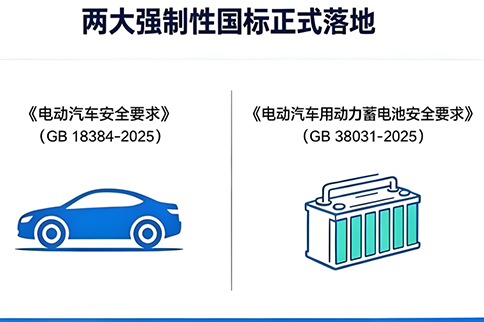
The most fundamental change in the new standard lies in the shift in assessment logic: the safety requirement for power batteries has been upgraded from "an alarm must be triggered 5 minutes after thermal runaway" to "no fire or explosion within a 2-hour observation period after thermal runaway." This represents a fundamental leap in battery safety design philosophy, moving from "providing escape time" to "blocking risks at the source."
Behind this standard upgrade, technological reserves at the material level are keeping pace—BlackFire carbon fiber non-flammable fabric has already entered the supply chains of several automakers.
01
How strict is the new standard?
The old standard only required occupants to have 5 minutes to escape before a battery fire, reflecting a "remedial" approach. The new standard directly requires the battery pack to "not catch fire or explode," ensuring that even smoke cannot harm occupants.
Experts from the China Automotive Technology and Research Center (CATARC) explained that the new national standard includes 7 individual cell tests and 17 battery pack or system tests, covering various hazardous scenarios such as high temperature, collision, short circuit, external fire, overcharging, and over-discharging.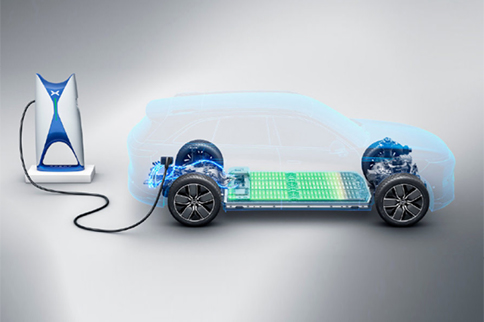
Several new additions are noteworthy: bottom impact testing, addressing the high-frequency risk of vehicle bottoming out; post-fast charging cycle safety testing, requiring external short-circuit testing even after 300 fast charges to ensure frequent fast charging does not degrade battery safety; and a physical one-button power-off device, replacing the previous software-based power-off logic, eliminating the need to figure out "how to cut off power" in emergencies.
It can be said that the biggest change in this new national standard is the shift from accident warning to source prevention. China has taken the lead internationally in making "no fire, no explosion" a mandatory requirement.
This is no longer a "scale race," but a "quality transformation."
02
The boundaries of safety are being redefined.
The upgraded standards place higher demands on upstream materials. Traditional flame-retardant fabrics mainly rely on surface coatings or the addition of flame retardants to the fibers to slow down the combustion process. However, at high temperatures, they still soften, shrink, and even melt and drip, essentially "delaying combustion" rather than "preventing combustion."
BlackFire carbon fiber non-combustible fabric employs a different technological approach: through the design of the fiber molecular structure, the material itself does not support combustion reactions, which is known in the industry as "inherently non-combustible." Furthermore, its limiting oxygen index (LOI) is as high as 57%, far exceeding the classification threshold of >27% for general flame-retardant materials. It has also passed the national standard A (A2) level non-combustible material certification, making it one of the earliest materials in the textile industry to achieve building-grade non-combustible standards.
Seat Application: In a leading new energy vehicle manufacturer's high-end models, the seats are upholstered in Black Fire carbon fiber leather composite fabric—weighing 600g/㎡, offering both the feel of genuine leather and inherent non-flammability. In the event of battery thermal runaway, traditional flame-retardant fabrics will soften, shrink, or even melt and drip at high temperatures, while carbon fiber fabric will not burn or melt, effectively providing an extra layer of close-fitting safety for the occupants.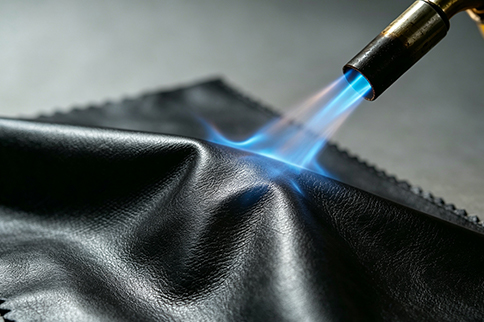
Battery Cover Application: BlackFire has developed a 480g/㎡ carbon fiber fabric that can be used in the battery cover system within the battery pack. It exhibits stable performance at 300℃, withstands over 40 minutes of flame at 1000℃, and can tolerate temperatures above 1600℃, covering the temperature range during thermal runaway in new energy vehicle batteries. This time window is sufficient for personnel evacuation and fire department response.
Where you can see, the seats are safer; where you can't see, the battery is also more securely protected.
03
Safety is a matter that requires deep commitment.
The new national standard does indeed make batteries safer, but "mandatory requirements" do not equal "absolute zero risk."
Slight differences in manufacturing processes, performance degradation over long-term use, and uncontrollable factors under extreme conditions—even the strictest standards cannot guarantee 100% protection. This is why, even with the new national standard and even with batteries being layered, automakers continue to seek more reliable protection solutions.
Standards are being upgraded, materials are evolving, and safety boundaries are being pushed outwards accordingly. From a 5-minute escape window to a 2-hour fire-free observation period, from accident warnings to source prevention, this process reflects a systemic safety upgrade jointly driven by standard setters and upstream material companies.
Founded in 2021, BlackFire focuses on the research and development of ultra-high temperature non-combustible materials, with products covering multiple fields including new energy vehicles, fire protection, and industrial high-temperature protection. Enabling materials to protect lives is BlackFire's corporate mission and the starting point for its continuous investment in battery safety materials.
LATEST POST
Let’s create something amazing together
contact us
-
 905, Yanxiang Technology Building, Binkang Road, Binjiang District, Hangzhou City, Zhejiang Province, China
 -
 +86-057186797597
 -
 +86-15658877105
 -

- QUICK LINKS
- Home
- About BlackFire
- Our Story
- FAQ
- QUICK LINKS
- Technology
- Application
- Contact Us
- NEWS & INSIGHTS
- Company News
- Industry News
Don't hesitate to contact when you need us!

