


 English
  عربى
عربى  中文简体
中文简体
Xinhua News Agency Exposes Fire Blanket Hazards: Why Can a “Life-Saving Tool” Also Cause Injury?
Recently, the topic #Fire Blankets Should Not Be Handled Directly has sparked widespread online discussion, with multiple media outlets reporting on the hidden skin hazards posed by fiberglass fire blankets. Xinhua News Agency's core short-video platform, “Xinhua Quick View,” has also covered this trending event.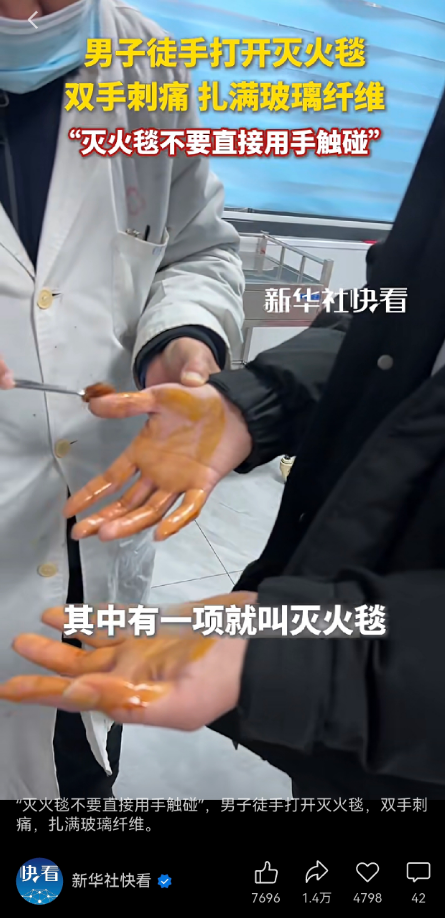
Fire blankets are common firefighting equipment woven from flame-retardant or non-combustible materials. They isolate heat sources and flames, making them suitable for extinguishing small, initial fires or covering oneself during escape.
However, a man in Henan suffered glass fiber puncture wounds to both hands while testing a fire blanket without protective gear. In excruciating pain, he sought medical treatment at a hospital.
The video quickly drew public attention and sparked discussion: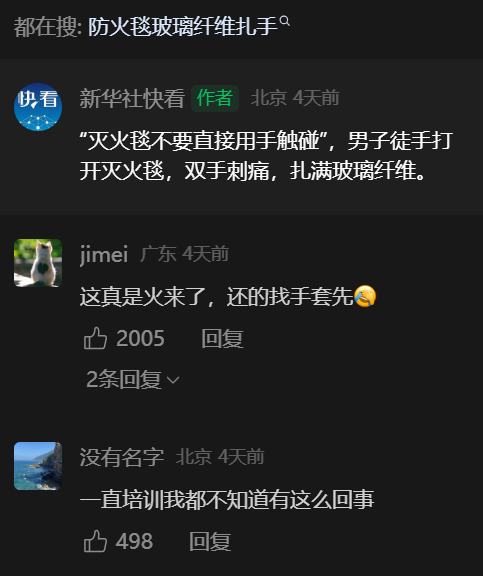
From online discussions, it's clear the issue isn't whether people know how to use fire blankets, but whether ordinary individuals can strictly follow protocols during sudden fires. When emergency equipment causes noticeable discomfort or even injury upon use, the inherent safety of its materials warrants serious scrutiny.
Consequently, public attention is shifting from “usage methods” to “the materials themselves.” The hidden risk of skin damage posed by fiberglass fire blankets is now being recognized by more people.
01
What risks do fiberglass fire blankets pose?
The fire blanket tested by the man was made of fiberglass. Fiberglass is an inorganic non-metallic material produced by drawing molten glass into fibers. It offers advantages such as insulation, heat resistance, corrosion resistance, and high mechanical strength. With a high-temperature combustion range of 250°C–1200°C, it has become a common material for fire blankets.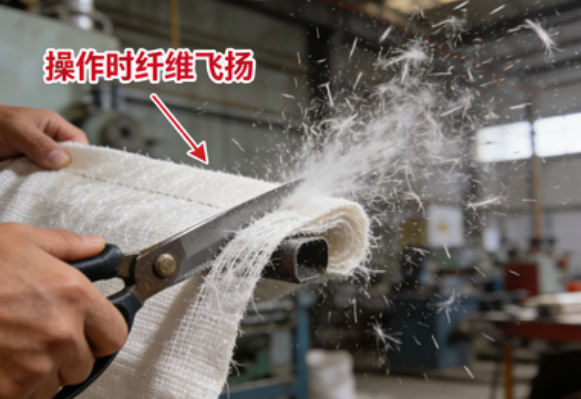
However, its drawbacks are equally significant:
Prone to skin puncture. Glass fiber monofilaments measure only a few micrometers to twenty micrometers in diameter. Each fiber consists of hundreds to thousands of monofilaments, exhibiting brittle texture and poor abrasion resistance, making them highly susceptible to breakage and penetration into the skin.
Risk of dispersion. Broken glass fibers can easily become airborne, causing itching and irritation when they adhere to the skin. If inhaled, they may also damage the respiratory tract and lungs.
Potential carcinogenicity. According to the 2017 list published by the World Health Organization's International Agency for Research on Cancer, certain specialty glass fibers are classified as Group 2B possible carcinogens, while continuous glass fibers are listed as Group 3.
Despite widespread use, users must exercise caution and implement protective measures when handling skin-contact items—especially household firefighting equipment—to prevent injury.
02
When “bare-handed deployment” is unavoidable, how to select a qualified fire blanket to minimize risk
Xinhua News Agency advises “do not handle with bare hands,” but in real emergency scenarios, there may be no time to find gloves, ordinary households lack professional protective gear, and panic can lead to instinctive bare-handed operation. In such moments, material selection becomes critically important.
A well-designed and suitable fire blanket should ensure effective fire suppression during emergencies while being user-friendly and preventing secondary injuries to the user.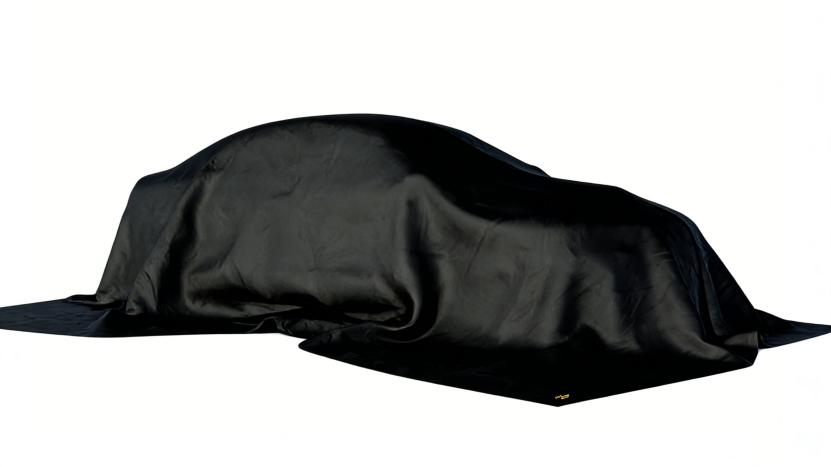
Core selection criteria should focus on the following points:
Non-combustible and stable: Fire blanket fabric must not burn or drip at high temperatures and should not rely on easily depleted coatings for flame resistance, ensuring consistent performance during critical moments.
Material Safety and Soft Texture:
The material must guarantee structural stability and skin-friendly properties, preventing irritation or injury to the user before or after firefighting operations—avoiding situations where “the enemy is harmed first, but so is oneself.”
Breathability, Explosion Suppression, and High-Temperature Isolation:
When covering a fire source, excellent breathability prevents heat buildup and potential explosions. When used in conjunction with cooling equipment like spray systems, it further accelerates temperature reduction.
Simultaneously, fire blankets must possess superior thermal insulation properties. When tackling fires involving electric vehicle batteries, they ensure personal safety while minimizing property damage. This prevents scenarios where an insured vehicle catches fire and ignites nearby vehicles, leading to insurance claims being denied.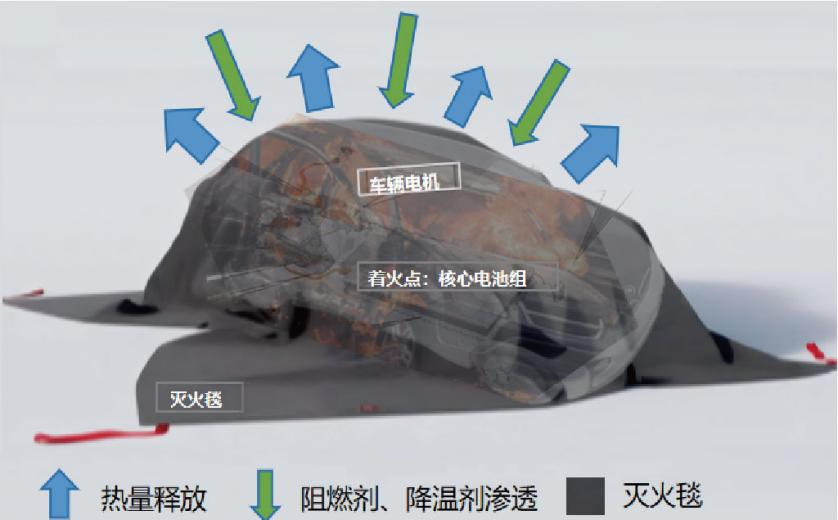
03
Fire Blankets Entering a “Human-Centered” Material Upgrade
As new energy fires and household emergency scenarios increase, the industry's perception of fire blankets is evolving—evaluation standards are shifting from “whether it can extinguish fires” to “whether it prioritizes human safety throughout the entire usage process.”
In recent years, companies specializing in high-temperature protection and non-combustible materials have begun upgrading traditional fire blankets by addressing material sources.
For instance, inherently non-combustible fabrics offer enterprises superior alternatives, ensuring high-temperature stability while minimizing skin irritation risks. Through optimized fabric structures, fire blankets now effectively block flames during coverage while allowing internal heat to dissipate gradually, reducing secondary risks from energy buildup. They also enable dual-mode cooling when used with spray or sprinkler systems, achieving comprehensive fire prevention and control.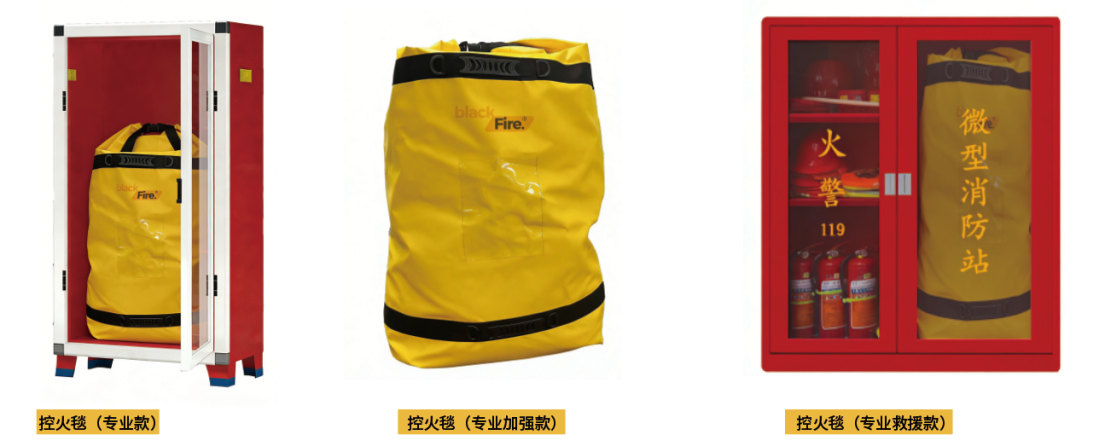
In this direction, companies like Jingzhen Technology are pioneering the integration of “non-combustible” materials—originally developed for emergency firefighting, military, industrial, and protective applications—into public safety products such as fire blankets. Adhering to principles of safety, portability, and ease of deployment, Jingzhen Technology has designed fire blankets tailored for three distinct scenarios, with customizable specifications available.
Professional Edition: Designed for emergency response to fires in home kitchens and small lithium-battery appliances like smartphones, toys, and computers.
Professional Enhanced Edition: Suitable for small to medium-sized battery fires, such as those in electric bicycle batteries.
Professional Rescue Edition: Engineered for emergency handling of large lithium-battery fires in passenger vehicles, commercial settings, and public spaces, including new energy vehicles and battery modules. Under conditions of intense heat release and sustained flames, it rapidly covers and effectively isolates the fire, assisting rescue personnel in controlling the blaze during the initial stages and limiting its spread, thereby buying time for subsequent professional intervention.
Even fire blankets designed for professional rescue scenarios prioritize operational efficiency. Through optimized dimensions and structural design, they can be deployed and effectively control the fire within a short timeframe with just two people working together.
Safety should never be a choice. When the “life-saving tool” itself harbors hidden risks, every race against time in a fire scene may come with unnecessary harm.
From the discomfort of glass fiber to the emergence of carbon fiber as a new material, this discussion about fire blankets reflects not only the evolution of material technology but also a profound return to a “people-centered” safety philosophy.
Carbon fiber has driven more than just an upgrade in product materials; it has redefined an industry's boundaries of safety and human-centered experience.
It reminds us: true safety assurance lies in technology fading into the background during crises, allowing protection to activate silently when it matters most.
On the long journey of fire safety, every material innovation and every refinement in detail serves as a vivid testament to the utmost reverence for life—because the best rescue begins with protection that requires no sacrifice.
LATEST POST
Let’s create something amazing together
contact us
-
 905, Yanxiang Technology Building, Binkang Road, Binjiang District, Hangzhou City, Zhejiang Province, China
 -
 +86-057186797597
 -
 +86-15658877105
 -

- QUICK LINKS
- Home
- About BlackFire
- Our Story
- FAQ
- QUICK LINKS
- Technology
- Application
- Contact Us
- NEWS & INSIGHTS
- Company News
- Industry News
Don't hesitate to contact when you need us!

