


 English
  عربى
عربى  中文简体
中文简体
From “reactive measures” to “intrinsic safety,” the Two Sessions send a significant signal.
The 2026 National People's Congress and Chinese People's Political Consultative Conference concluded successfully. The sessions sent a series of key signals—with “intrinsic safety” emerging as a crucial keyword in national security governance.
Delegates and committee members intensively proposed recommendations spanning new energy battery safety, enhanced building fire protection, and the advancement of high-end emergency safety materials. The Government Work Report explicitly stated: “We will improve the public safety system, promote a shift toward preemptive prevention, and continuously enhance intrinsic safety levels.”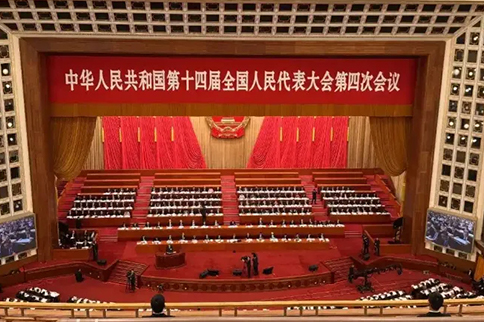
This signifies that in the opening year of the 15th Five-Year Plan, safety governance is undergoing a comprehensive shift from “reactive response” to “proactive prevention and control,” with material innovation emerging as the core driver of this transformation.
The guiding principle is clear: Safety must be addressed at its source.
In fire protection, this source often refers to materials. Black Fire carbon fiber fabric builds foundational protective capabilities through an inherently non-combustible material system, providing more stable safety support in high-temperature and flame environments.
01
Safety Questions Across 3 Major Fields: Material-Level Answers from Black Fire Carbon Fiber
New Energy Battery Safety: From “Passive Rescue” to “Proactive Prevention”
National People's Congress deputy Song Xiqian emphasized at the Two Sessions that lithium battery safety concerns both industrial vitality and public welfare, necessitating material upgrades for root-cause governance.
Notably, the mandatory national standard “Safety Requirements for Power Batteries Used in Electric Vehicles,” formulated by the Ministry of Industry and Information Technology, will take effect on July 1, 2026. New national standards for lithium batteries in power banks, electric motorcycles, and other sectors will also be rolled out successively. This signals a comprehensive elevation of regulatory thresholds for battery safety.
Addressing the industry's pain point of thermal runaway, Jingzhen Technology's Black Fire carbon fiber ultra-high-temperature non-combustible material offers a solution.
This material withstands combustion at temperatures exceeding 1600°C, maintaining structural integrity under high-temperature burning conditions. It does not burn, melt, or easily penetrate, effectively forming a thermal isolation and protective barrier.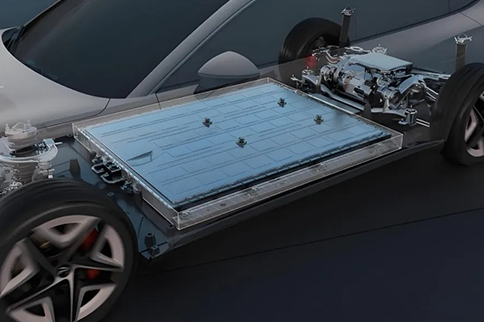
Currently, this material can be applied in critical scenarios such as fire blankets for new energy vehicles, thermal insulation for battery packs, and protective seat coverings, providing more reliable material support for the safety of new energy vehicles.
Emergency Safety Materials: High-End Development is Urgent
Emergency safety fibers serve as the “life armor” for frontline personnel and are a critical pillar for modernizing national emergency response capabilities.
Representative Song Xiquan called for: strengthening R&D platform development, conducting systematic technological breakthroughs in emergency safety fiber products, establishing a standardized framework, and promoting the high-end application of advanced emergency safety fiber products. This will drive the implementation of high-end protection solutions and resolve the industry's dilemma of “loose standards and weak enforcement.”
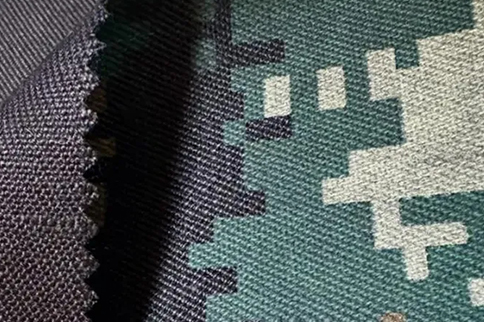
Black Fire carbon fiber materials, with their inherent non-combustibility, resistance to melt dripping, and soft, skin-friendly properties, are widely used in high-risk scenarios such as emergency firefighting, military protection, industrial high-temperature protection, and new energy vehicle safety protection. They provide reliable safeguards for workers and align closely with the policy direction of industrialization and standardization in the high-end security sector.
Building Protection Materials: Constructing Quality Buildings with Quality Materials
Academician Peng Shou of the Chinese Academy of Engineering stated unequivocally: Certain traditional materials currently prevalent in construction exhibit inadequate flame retardancy and are prone to dripping, posing significant hidden dangers. He recommended accelerating standard upgrades, raising flame-retardancy thresholds, and establishing a core materials list and access mechanism for future human habitation.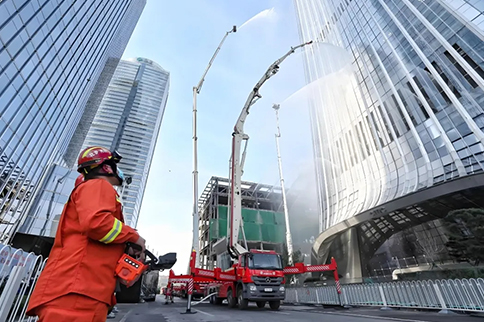
Black Fire carbon fiber-reinforced polymer (CFRP) can be used for fire isolation in buildings and flame-retardant linings in public spaces, addressing existing safety hazards with its inherently non-combustible properties. Unlike traditional materials that rely on coatings or post-treatment for flame retardancy, inherently non-combustible materials reduce combustion risks at the source, providing a more stable foundation for fire safety in public buildings, transportation hubs, and large public spaces.
From fire-isolation curtains and flame-retardant wall upholstery to cable fire-protection coatings, this technology is quietly embedding safety into every detail of architectural spaces.
02
Carbon Fiber New Material: Redefining “Intrinsic Safety” Through “Intrinsically Non-Combustible” Properties
Most flame-retardant materials on the market rely on chemical coatings for fire resistance, still posing risks of melting, dripping, smoke emission, and secondary damage at high temperatures. Black Fire Carbon Fiber New Materials has charted a different course—starting from the fiber structure, achieving true inherent non-combustibility through process improvements and modification treatments. It's not about adding coatings or flame retardants; the material itself simply “won't burn.”
This breakthrough elevates safety philosophy from “delaying combustion” to “preventing combustion at its source.”
Currently, carbon fiber new materials have formed a multi-scenario product matrix:
Fire Blanket Series: Designed for new energy vehicles and electric bikes, lightweight and portable, non-combustible and non-melting at 1600°C
Professional Protective Gear Series: Firefighting suits, welding suits, fireproof tents, combat protective gear, welding blankets, etc.
Home Safety Series: Fireproof aprons, face shields, document pouches, digital storage protection, etc.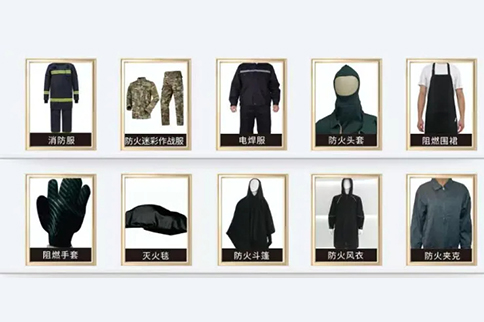
Covering scenarios such as fire emergency response, new energy, national defense and military, industrial protection, logistics transportation, and home safety, we extend intrinsic safety from specialized fields to everyday life.
03
The Highest Realm of Safety: Implementing “Preventive Measures”
The recent Two Sessions outlined a clear blueprint for safety governance over the next five years: upgrading standards, innovating materials, and implementing full-chain prevention and control.
For ordinary people, workers, and millions of families, true security lies not in slogans, but in the invisible yet ever-present force that protects them. Like an invisible barrier against raging flames, it quietly blocks danger when crises strike—saving lives in the process.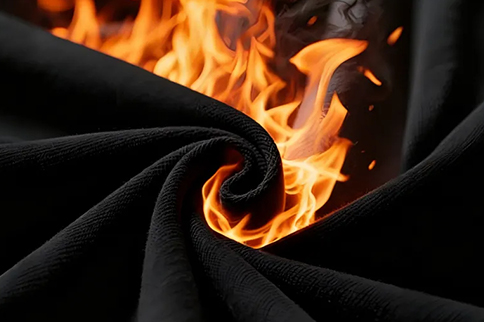
BlackFire delivers material-level protection through its innovative Black Fire carbon fiber composite, turning “prevention” into reality: making passive flame retardancy obsolete and intrinsic non-combustibility the standard; stopping risks at their source and ensuring protection is everywhere.
From new energy vehicle battery packs to building fire barriers, and public space linings—every application embodies a silent promise of safety.
Building a foundation of safety through material innovation,
Safeguarding high-quality development with inherent security.
This is the responsibility and commitment of China's new materials industry under the spirit of the Two Sessions—making safety not merely a hope, but a tangible force.
LATEST POST
Let’s create something amazing together
contact us
-
 905, Yanxiang Technology Building, Binkang Road, Binjiang District, Hangzhou City, Zhejiang Province, China
 -
 +86-057186797597
 -
 +86-15658877105
 -

- QUICK LINKS
- Home
- About BlackFire
- Our Story
- FAQ
- QUICK LINKS
- Technology
- Application
- Contact Us
- NEWS & INSIGHTS
- Company News
- Industry News
Don't hesitate to contact when you need us!

