


 English
  عربى
عربى  中文简体
中文简体
I recommend that every business owner personally light a match to their employees' work uniforms | Free samples available
From the fireworks explosion in Hunan to the mining disaster in Shanxi, two major safety accidents have occurred in quick succession within a single month, shattering more than a hundred families. Never before has the alarm bell for safety rung as loudly as it has this month.
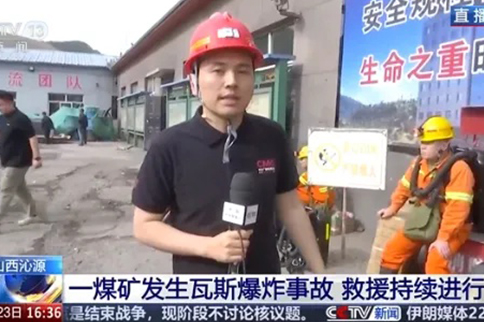
June marks the upcoming National “Work Safety Month.” Every year at this time, industries across the board conduct drills, inspect for hazards, and sign responsibility agreements—and this year, the emphasis is even greater.
Yet there is one “minor” detail that is most closely tied to workers’ physical well-being, yet is often overlooked—are the work uniforms being purchased truly safe?
01
Protective Workwear: It’s Not Enough to Just “Have” It
Take fire-resistant workwear as an example. The so-called flame-retardant uniforms purchased by many companies are actually just ordinary fabrics coated with a flame-retardant finish. This coating may lose its effectiveness after just a few washes, and the fabric will still burn through when exposed to high temperatures.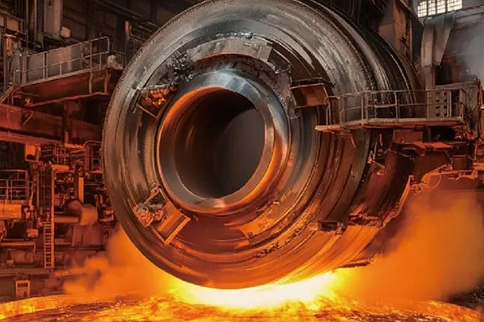
For companies, the priority is to cut costs and maximize profits, but workers lack the expertise to understand these issues, and procurement departments often struggle to distinguish between quality and substandard products. As a result, workers end up wearing such work uniforms.
If no accident occurs, that’s one thing; but in the event of an accident, these uniforms not only fail to save lives but can actually be more dangerous than wearing nothing at all:
Secondary injury from molten droplets: Synthetic fibers or low-quality flame-retardant fabrics melt and drip when exposed to high temperatures, causing direct burns to the skin from “fireballs” reaching hundreds of degrees.
After-burn and fire spread: Once ignited, the fabric continues to burn and can even act as a “fuel” that accelerates the spread of the fire.
Toxic smoke and suffocation: The thick smoke and toxic gases—such as carbon monoxide—produced by combustion are responsible for 80% of casualties in fires.
When workers enter the workshop wearing such uniforms, they are essentially leaving their last line of defense to chance.
02
What Constitutes True “Safety Workwear”?
For workwear in high-risk industries, two concepts must first be clarified: flame-retardant ≠ and non-flammable.
True safety workwear cannot merely “delay combustion”; it must ensure that the material “simply cannot catch fire.” BlackFire’s independently developed Black Fire carbon fiber ultra-high-temperature non-flammable fabric was created specifically to address high-risk environments.
Its core feature is “intrinsic non-combustibility”—through secondary modification, the material’s limiting oxygen index has been elevated to 57%, far exceeding the standard of >27% for typical flame-retardant materials. It inhibits combustion reactions at the fiber level, meaning it will not burn and will maintain structural integrity even when exposed to a 3,000-degree flame.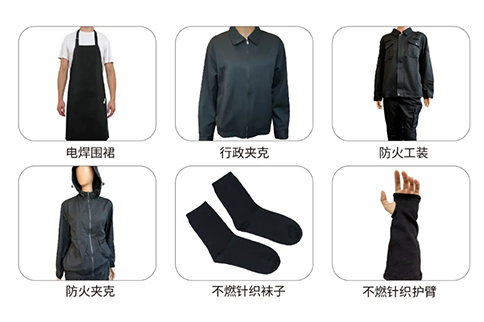
Based on this technology, BlackFire has developed a series of protective workwear for a wide range of scenarios, including fire-resistant workwear, fire-resistant jackets, welding aprons, and flame-retardant knitted arm guards, suitable for high-risk production environments such as chemical, petroleum, welding, and metallurgical industries.
Currently, these products are in use on the front lines of many enterprises and have been proven to effectively reduce the risk of burns, serving as a powerful safety safeguard for workers.
03
Protective Equipment Is Not a Cost; It Is an Investment in Safety
The series of major safety accidents occurring in quick succession gives us much to reflect on. Ultimately, weak safety awareness and insufficient safety investment within enterprises are the root causes of these accidents.
The significance of Work Safety Month lies not in going through the motions, hanging banners, submitting reports, preparing for inspections, or merely leaving a paper trail. Rather, it requires treating every single step as a life-or-death defense line to be safeguarded, ensuring that every worker can go to work with peace of mind and return home safely.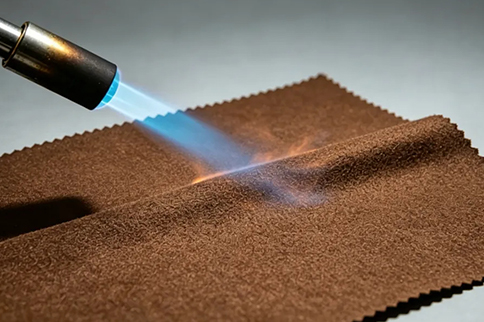
While safer workwear may cost a little more than standard workwear, when compared to the loss of a life or the devastation of a family, it is well worth the investment no matter how you look at it.
During Work Safety Month, companies might consider doing one simple thing: find a piece of flame-retardant workwear currently in use, set it on fire yourself, and see if it meets safety standards.
P.S.: During Work Safety Month, BlackFire is offering free A4-sized samples of its carbon-fiber non-flammable fabric for a limited time.
Feel free to message us for more information or contact Jingzhen Customer Service to claim your sample and experience the true protective power of this non-flammable fabric firsthand.
LATEST POST
Let’s create something amazing together
contact us
-
 905, Yanxiang Technology Building, Binkang Road, Binjiang District, Hangzhou City, Zhejiang Province, China
 -
 +86-057186797597
 -
 +86-15658877105
 -

- QUICK LINKS
- Home
- About BlackFire
- Our Story
- FAQ
- QUICK LINKS
- Technology
- Application
- Contact Us
- NEWS & INSIGHTS
- Company News
- Industry News
Don't hesitate to contact when you need us!

