


 English
  عربى
عربى  中文简体
中文简体
After 37 lives were lost, an underestimated safety issue has finally come to light
May 4, 2026, Liuyang, Hunan. An explosion that shocked the entire nation shattered the peace of countless families.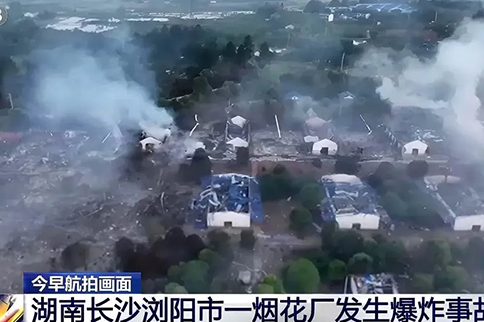
That afternoon, a catastrophic explosion occurred in the production workshop of a fireworks factory in Liuyang City. Immediately afterward, the State Council established an investigation team to conduct a thorough inquiry. The toll of this tragedy is heartbreaking—the accident has left 37 people dead, one missing, and many others injured. All fireworks and firecracker manufacturers in Liuyang City have suspended operations for rectification, and the entire industry is engulfed in a mood of deep reflection.
As the investigation deepened, hidden dangers buried for years were exposed: illegal co-storage, regulatory blind spots, inadequate worker protection... Every detail felt like a thorn piercing the hearts of everyone concerned about safety.
However, as the casualty figures stung everyone, a deeper question emerged: At the moment of danger, can the final line of defense worn by those in high-risk industries truly be relied upon?
01
The “Hidden Dangers” in High-Risk Industries
Fireworks production workshops are unquestionably high-risk areas. They are filled with organic solvents, flammable and explosive dust, and static electricity. In such an environment, even the tiniest static spark generated by the friction of an operator’s synthetic fiber clothing could become the “final match” that ignites the entire space.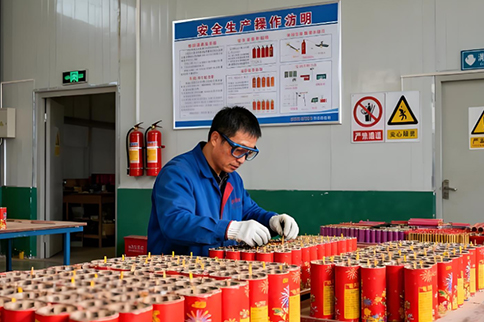
The national “Safety Code for Engineering Design of Fireworks and Firecrackers” explicitly requires that on-site personnel must wear work uniforms that are flame-retardant, anti-static, acid- and alkali-resistant, and provide basic chemical protection. However, a post-incident investigation revealed that the company involved had opted for substandard protective gear to cut costs; the material of the protective clothing fell far short of industry safety standards and proved utterly ineffective when the accident occurred.
Fireworks, chemicals, petroleum, metallurgy... while the industries differ, the nature of the danger remains similar. We cannot completely eliminate accidents in high-risk industries, but at the very least, we can harness the power of materials science to provide every frontline worker with a “flame-resistant barrier”—this is the significance of technological advancement, and it is also the mission of Jingzhen Technology.
02
From “Flame-Retardant” to “Non-Flammable”: Protective Materials Form the Final Line of Defense
BlackFire’s proprietary Black Fire carbon fiber ultra-high-temperature non-flammable fabric was developed specifically for these high-risk environments. Its core strength lies in its unique material property of being “intrinsically non-flammable.”
Unlike traditional flame-retardant solutions that rely on chemical coatings, Black Fire carbon fiber fabric undergoes a fundamental modification at the molecular level, endowing the material with inherent “non-combustible” properties. Even when exposed to ultra-high-temperature flames reaching 1,600°C, it does not burn, drip, or emit toxic smoke. Like a sturdy suit of armor, it withstands the onslaught of heat and flames, buying the wearer precious time for escape and evacuation in critical moments.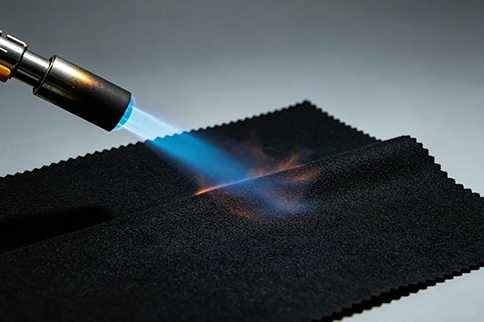
Leveraging Black Fire carbon fiber ultra-high-temperature flame-retardant fabric, Jingzhen Technology has developed a comprehensive range of safety protection products for various scenarios: fire-resistant workwear, fire-resistant jackets, welding aprons, and firefighting uniforms for high-risk industries, as well as fire blankets and fire-resistant curtains for personal and household emergencies. These products provide reliable safety protection in high-temperature, fire, and emergency situations.
The accident in Liuyang serves as a stark reminder that in high-risk industries, protective gear is not a cost—it is an investment in life. Ensuring that every garment and every piece of fabric can withstand the test of real flames is Jingzhen’s commitment to “letting materials safeguard lives.”
03
Bringing “Non-Flammable” Fabrics to High-Risk Work Sites
Currently, products made from Black Fire carbon fiber ultra-high-temperature non-flammable fabric have been widely adopted and validated across multiple sectors, including fire and emergency response, new energy vehicles, national defense and military industries, industrial protection, logistics and transportation, and home safety. Recently, this material successfully obtained Class A (A2) non-combustible material certification under GB 8624-2012 “Classification of Fire Performance of Building Materials and Products”—marking the first time a textile material has achieved the highest non-combustibility rating in the construction sector and setting a new industry precedent.
The explosion in Liuyang claimed 37 lives and sounded a long-lasting alarm for safety protection across all high-risk industries. Rather than repeatedly reflecting on and assigning blame after the fact, we should instead embed safety oversight into everyday details, reinforce enterprises’ primary responsibility for workplace safety, prevent substandard protective equipment from entering workplaces, comprehensively safeguard the safety red lines of high-risk industries, and prevent similar tragedies from recurring.
We firmly believe that “Let Materials Protect Lives” is not only the mission of Jingzhen Technology but can also be genuinely implemented in every high-risk industry, building a solid “non-combustible” barrier for every frontline worker.
LATEST POST
Let’s create something amazing together
contact us
-
 905, Yanxiang Technology Building, Binkang Road, Binjiang District, Hangzhou City, Zhejiang Province, China
 -
 +86-057186797597
 -
 +86-15658877105
 -

- QUICK LINKS
- Home
- About BlackFire
- Our Story
- FAQ
- QUICK LINKS
- Technology
- Application
- Contact Us
- NEWS & INSIGHTS
- Company News
- Industry News
Don't hesitate to contact when you need us!

