

 English
  عربى
عربى  中文简体
中文简体
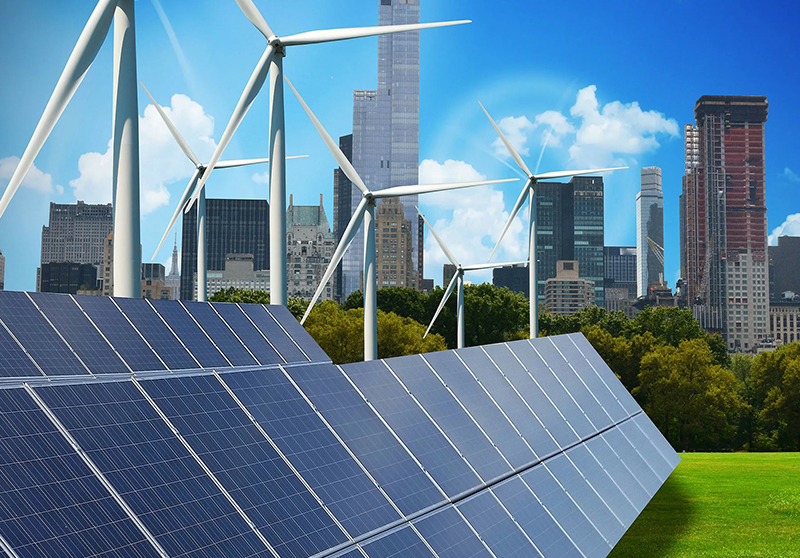
Below is an analysis of the core application scenarios, performance advantages, and technical value of carbon fiber fabric in the new energy sector, highlighting its characteristics such as high temperature resistance, flame retardancy, electrical/thermal conductivity, and chemical corrosion resistance:
1. Lithium Batteries and Energy Storage Systems
Application Scenarios:
- Flame-retardant partitions/thermal runaway protection layers for battery packs
- High-temperature-resistant insulating sheaths for battery wiring harnesses
- Fireproof and thermal insulation linings for energy storage containers
Core Value:
- Thermal Runaway Suppression: As a battery separator, the fabric’s flame-retardant properties delay heat diffusion (thermal conductivity <0.05W/(m·K)). Combined with aerogel composites, it reduces heat transfer between adjacent batteries by over 90%, meeting UL 94 V-0 flame-retardant standards.
- Enhanced Electrical Conductivity: Carbon fiber conductive yarns in wiring harness shielding layers improve signal transmission stability (impedance <5Ω) while resisting electrolyte corrosion (strength retention rate >95% in pH 1-14 environments).
- Lightweight Design: Energy storage container linings using carbon fiber felt are 60% lighter than traditional ceramic fiber boards, reducing transportation energy consumption and improving installation efficiency (e.g., a 100kWh energy storage module loses over 300kg in weight).
2. Photovoltaics and Concentrated Solar Power (CSP)
Application Scenarios:
- High-temperature-resistant backsheets for photovoltaic modules
- Protective coatings for CSP absorber tubes
- Lightweight structural materials for solar-powered drones
Core Value:
- Weather Resistance Improvement: Photovoltaic backsheets using carbon fiber composite films can withstand 5,000 hours of UV radiation (equivalent to 25 years of outdoor exposure) with a yellowing index <5, outperforming traditional PET backsheets (yellowing index >15).
- Efficient Thermal Management: CSP absorber tubes coated with carbon fiber thermal conductive coatings (thermal conductivity >100W/(m·K)) increase heat absorption efficiency by 15%-20% while withstanding temperatures above 400°C (e.g., in molten salt environments).
- Aviation-Grade Weight Reduction: Solar drone fuselages using carbon fiber weaving have a strength-to-weight ratio of 200MPa·m/kg, 45% lighter than aluminum alloy frames, extending flight endurance (e.g., from 12 to over 24 hours).
3. Hydrogen Energy and Fuel Cells
Application Scenarios:
- Flame-retardant and anti-static coatings for hydrogen pipelines
- Insulating partitions for fuel cell stacks
- Cryogenic thermal insulation layers for liquid hydrogen storage tanks
Core Value:
- Hydrogen Safety Protection: The fabric’s conductive fibers dissipate static electricity from friction during hydrogen leaks (surface resistance <10⁶Ω), while flame retardancy meets ISO 19880-1 hydrogen safety standards to suppress hydrogen fire spread.
- Wide Temperature Range Adaptability: Maintains dimensional stability with an error <0.1% in the range from -253°C (liquid hydrogen) to +200°C (fuel cell operating temperature), outperforming traditional rubber materials (error >3%).
- High-Efficiency Thermal Insulation: Liquid hydrogen tanks using carbon fiber vacuum insulation panels have a thermal conductivity <0.001W/(m·K), reducing the boil-off rate (BOR) from 3% to below 0.5%, improving hydrogen storage and transportation efficiency.
4. Wind Power and Turbine Equipment
Application Scenarios:
- Flame-retardant layers for wind turbine blades (leading edge lightning protection)
- High-temperature-resistant seals for gearboxes
- Corrosion-resistant mooring ropes for offshore wind farms
Core Value:
- Lightning Strike Resistance: Carbon fiber conductive networks embedded in blade leading edges enhance lightning current dissipation efficiency to over 95% (vs. ~70% for traditional aluminum foil), reducing blade cracking risks (e.g., an 80% drop in lightning damage rates for 3MW blades).
- Long-Life Sealing: Gearbox seals using carbon fiber-reinforced PTFE composites resist lubricant corrosion for 100,000 hours—5 times longer than ordinary rubber seals—reducing downtime maintenance costs (annual savings of ~¥200,000 per unit).
- Marine Environment Protection: Offshore wind mooring ropes made of carbon fiber have a tensile strength of 3,500MPa and resist salt spray corrosion (strength retention rate >98% after 5,000 hours of testing), suitable for deep-sea wind farms.
5. New Energy Vehicles and Charging Piles
Application Scenarios:
- Fire blankets for power battery packs
- Shielding materials for high-voltage wiring harnesses
- High-temperature-resistant insulation layers for charging piles
Core Value:
- Battery Safety Enhancement: Carbon fiber fire blankets (1-3mm thick) can withstand 1,000°C flames for over 30 minutes, preventing thermal runaway spread in battery packs (passing GB/T 38031-2023 needle penetration tests).
- Electromagnetic Compatibility Optimization: High-voltage wiring harnesses with carbon fiber braided shielding layers reduce EMI radiation by over 40dB (compliant with CISPR 25 Class 5 standards), avoiding interference with in-vehicle electronics.
- Fast Charging Adaptation: Charging pile internal insulation using carbon fiber paper (temperature resistance 220°C) supports 1,000V high-voltage fast charging (traditional PET insulation only withstands 130°C), increasing charging power density (up to 500kW+).
Technical Advantage Comparison (vs Traditional New Energy Materials)
| Performance Index | Traditional Materials (PET, Rubber) | Carbon Fiber Fabric |
|---|---|---|
| Upper Temperature Limit | 130-200°C | >500°C (air environment) |
| Thermal Conductivity | 0.1-0.3W/(m·K) | 0.01-0.1W/(m·K) (adjustable) |
| Flame Retardancy Rating | UL94 V-2 | UL94 V-0 (thin materials reach 5VA) |
| Hydrogen Embrittlement Resistance | Prone to hydrogen corrosion | Strength retention rate >95% under 10MPa hydrogen pressure |
Future Development Directions
- Multi-Field Coupling Design (Thermal-Electrical-Mechanical):Develop intelligent carbon fiber-based materials integrated with temperature sensing (accuracy ±1°C) and stress monitoring to provide real-time fault warnings for new energy equipment (e.g., battery swelling, blade cracks).
- Bio-Based Circular Economy:Produce carbon fiber from waste biomass (e.g., bamboo fiber) to create a closed loop of "plants→fibers→new energy materials→recycling," reducing carbon emissions by ~2 tons per ton of carbon fiber produced.
- Extreme Environment Applications:Develop carbon fiber composites resistant to vacuum ultraviolet (VUV) radiation for space thermal control systems in lunar/Martian missions (e.g., thermal insulation layers for Chang'e-7 during lunar nights).